
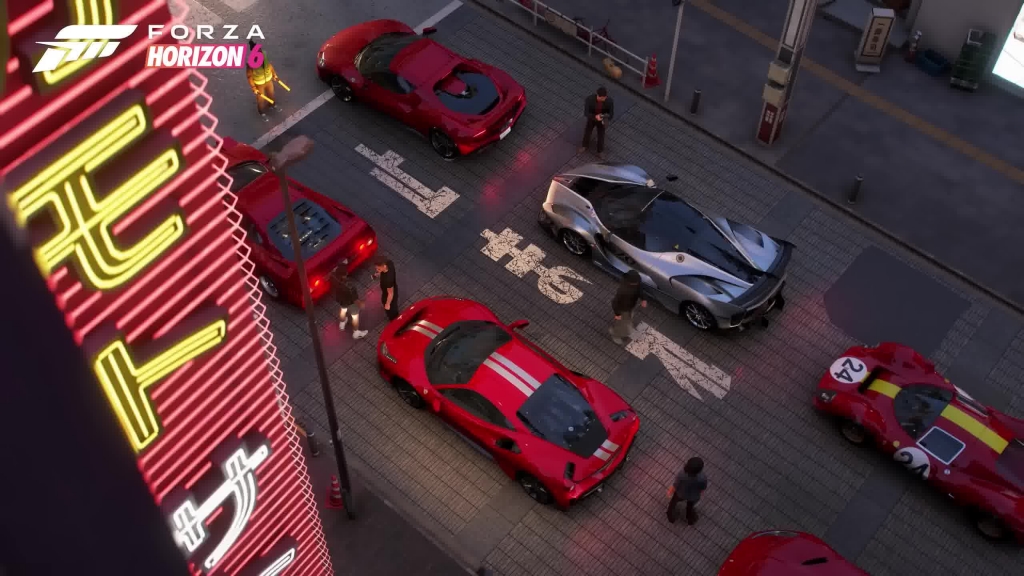
Forza Horizon 6 drops players straight into a familiar but amplified sandbox: high-grip time attack monsters, absurdly powerful engine swaps, and a tuning meta that quickly turns friendly competition into full-blown engineering warfare. What begins as a casual “with the lads” showcase of new cars rapidly escalates into iterative build optimization, lap-time obsession, and constant back-and-forth over who can extract the most performance from identical platforms.
This article breaks down the gameplay flow, vehicle builds, tuning philosophy, and competitive structure implied by the session, with structured data comparisons and performance insights.
Core Gameplay Loop: Build → Tune → Time Trial
At its core, Forza Horizon 6’s time attack format in this session revolves around a repeated loop:
- Select or unlock a car (often new to the franchise)
- Modify engine, aero, and drivetrain
- Tune for either grip or speed bias
- Run time trials on a closed circuit
- Iterate based on lap delta feedback
This loop becomes increasingly competitive as both players converge on similar performance ceilings.
Featured Vehicles & Build Philosophy
The session heavily features Japanese performance platforms, particularly Skylines and the newly introduced Nissan Silvia S15.
Vehicle Comparison Table
| Vehicle | Build Type | Engine Swap | Power Output | Drive Type | Primary Strength |
| Nissan Silvia S15 | Time attack build | High-performance swap (V10 mentioned in experimentation) | ~900–1000+ HP | AWD (implied tuning) | High grip cornering |
| Nissan Skyline R32 | Mixed build | R35 engine swap used | ~1000+ HP | AWD | Balanced acceleration |
| Time Attack Skyline Variant | Pre-built meta car | Factory performance tuning | High downforce focus | AWD | Stability + grip consistency |
The key design pattern is clear: engine swaps override platform identity, with R35 swaps becoming a dominant tuning direction for Skyline builds.
Build Strategy Breakdown
1. Aerodynamics vs Power Trade-off
Players consistently struggle between:
- High downforce setups → stable but lower top speed
- Low downforce setups → faster straights but unstable exits
The time attack cars in particular exhibit extreme grip behavior, described as “infinite grip,” which shifts the meta toward aggressive corner entry rather than braking discipline.
2. Engine Swapping Meta
A recurring tuning philosophy emerges:
- “Four cylinders are never enough”
- V10 swaps tested for novelty and acceleration
- R35 engine swaps used as optimal mid-ground solution
Engine Strategy Table
| Engine Choice | Benefit | Drawback |
| Stock I4 / base engine | Lightweight | Low top speed |
| R35 swap | Balanced high HP | Higher weight |
| V10 swap | Extreme acceleration | Unstable handling |
3. Tire Width and Grip Tuning
Tire width decisions directly impacted lap consistency:
- Too wide → over-grip, reduced rotation
- Too narrow → instability and spin-outs
The optimal setup leaned toward moderate rear bias, especially for AWD Skyline configurations.
Time Trial Performance Analysis
The competitive portion centers around repeated lap attempts with incremental improvements.
Lap Time Progression (Observed Runs)
| Attempt Stage | Approx Time | Notes |
| Initial run | ~43 sec | High instability, learning phase |
| Mid optimization | ~32 sec | Improved line consistency |
| Optimized runs | ~38–51 sec range | Variability due to tuning shifts |
| Peak competitive run | ~38 sec | Benchmark leaderboard tier |
A key insight: performance variance was heavily influenced by tuning changes mid-session, rather than raw driver improvement alone.
Handling Characteristics of Time Attack Cars
Time attack builds exhibit several defining traits:
- Extremely high grip thresholds
- Sensitive throttle control (spinning still possible despite AWD)
- High cornering speed but punishing exits
- “On/off” stability depending on tire width and aero
This creates a paradox: cars are both easy to drive at 80% pace and difficult at 100% efficiency.
Competitive Dynamics: Human vs Build Meta
The session highlights an important design truth about Forza Horizon 6:
Driver skill alone is secondary to tuning optimization.
Key competitive factors:
- Differential tuning between builds
- Aero configuration efficiency
- Engine swap selection
- Gear ratio optimization for track layout
A recurring theme is that identical cars can differ by several seconds purely based on setup, not driving.
Economy & Progression Context
While not central to the race session, progression systems such as upgrades and car acquisition remain relevant.
Players implicitly reference:
- Skill point XP farming via car usage
- Festival unlock restrictions
- Build progression tied to available credits and parts
In this ecosystem, progression efficiency is tightly linked to resource availability, including systems like Forza Horizon 6 Credits and upgrade gating.
Multiplayer Interaction Layer
The “with the lads” format introduces additional mechanics:
- Real-time rivalry tuning
- Mid-race psychological pressure
- Informal rule-setting (no upgrades vs full build wars)
- On-the-fly experimentation (engine swaps during discussion breaks)
This transforms time trials into a hybrid of competitive esports logic and casual co-op chaos.
Meta Insight: Why Skylines Dominate Early Builds
Skylines dominate early Forza Horizon 6 experimentation due to:
- High base tuning ceiling
- AWD compatibility with extreme power
- Flexible engine swap architecture
- Predictable handling under downforce
They function as baseline meta platforms for testing builds before branching into specialized cars.
Conclusion
Forza Horizon 6, as reflected in this session, is less about raw driving purity and more about iterative mechanical optimization under competitive pressure. The real gameplay emerges from tuning philosophy, engine experimentation, and lap-time shaving rather than simple racing execution.
The Skyline and S15 builds demonstrate how quickly the meta converges on high-power AWD setups, while time attack cars introduce a new layer of precision-grip racing that rewards consistency over aggression.
Players who want to stay competitive must think beyond driving skill alone and engage with the full build ecosystem—including tuning strategy, vehicle selection, and efficient use of progression systems such as Buy FH6 Credits when expanding their garage for meta experimentation.
