
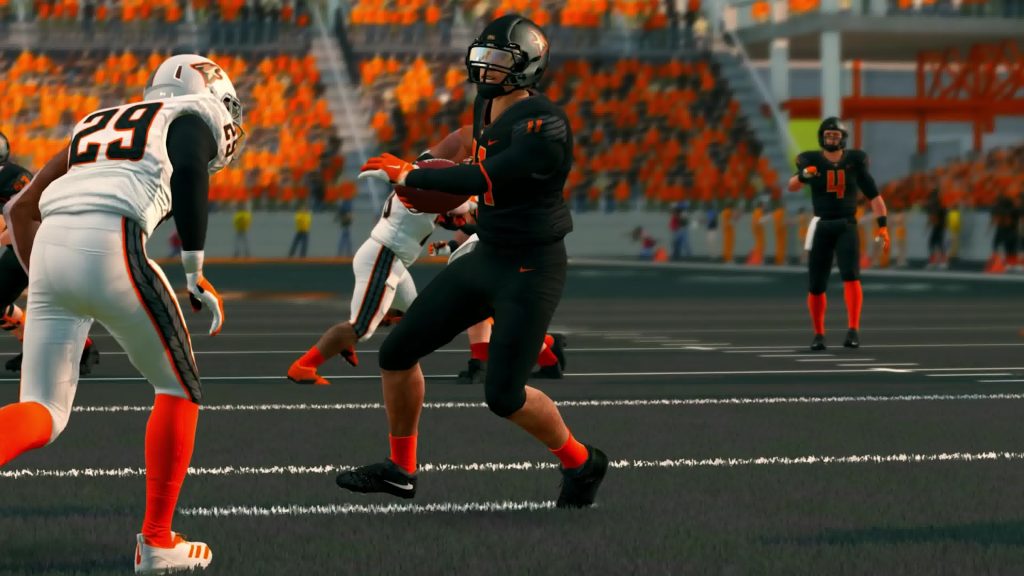
Every year around this time, the same pattern repeats itself in the sports gaming space. Early leaks surface, marketing ramps up, and players start imagining what the next entry will fix. With College Football 27, that cycle is already in full motion—alongside a familiar undertone of skepticism that’s been building across recent releases in the series.
After the return of the franchise with College Football 25 and its follow-up in College Football 26, expectations are split. Some players appreciated the foundation and nostalgia. Others felt the series either stagnated or even regressed in key systems. Now, with College Football 27 entering the conversation, the community is once again weighing promises against precedent.
The EA Pattern: Big Promises, Mixed Delivery
A consistent theme surrounding EA Sports titles—particularly football simulations from EA Sports—is the gap between marketing language and final execution.
College Football 27 is no different. Early leaked descriptions emphasize “dynasty blueprints,” expanded coaching systems, NIL integration, and facility progression tied to a new resource system. On paper, it sounds like a meaningful overhaul of Dynasty Mode. In practice, long-time players are cautious.
The concern isn’t the idea—it’s execution. Previous entries have demonstrated that features often launch in simplified or inconsistent forms, only to be “fixed” over time through patches rather than arriving fully realized.
That context heavily shapes how College Football 27 is being received.
Dynasty Mode: More Control, or More Illusion?
The biggest advertised shift revolves around Dynasty Mode restructuring. Players are expected to manage:
- Recruiting pipelines
- NIL-related decisions
- Staff development
- Facility upgrades
- Athletic director expectations
The introduction of a “dynasty points” system is meant to unify progression into a single economy.
In theory, this could solve long-standing issues. Recruiting has often been criticized for being too predictable, especially in mid-to-lower tier programs where top recruits sometimes fall through the cracks unrealistically. The transfer portal has also been considered too easy to exploit, allowing rapid roster construction that doesn’t mirror real-world constraints.
If College Football 27 genuinely tightens these systems, it could represent a meaningful step forward. But skepticism remains because similar promises have been made before.
The core concern is balance: making progression deeper without turning it into another simplified grind system disguised as strategy.
Recruiting and NIL: The Real Test
Recruiting is arguably the most sensitive system in the entire franchise. When it works, Dynasty Mode feels alive. When it doesn’t, immersion collapses.
The introduction of NIL mechanics is particularly important because it reflects real-world changes in college athletics. However, implementation is everything. If NIL becomes just another currency dump system, it risks flattening strategic depth rather than expanding it.
The community expectation is clear: recruiting should be harder, more competitive, and more context-driven. Smaller programs should not routinely land elite recruits without significant effort or narrative justification.
Coaching Carousel and Program Identity Issues
Another repeated criticism across recent entries is coaching progression and job mobility.
Players want flexibility:
- Starting as a coordinator at a major program
- Moving down to rebuild a smaller school
- Receiving realistic job offers based on performance
Instead, prior systems have often felt restrictive or arbitrary.
There’s also the issue of program growth not visually or structurally reflecting success. A school can rise in prestige but remain locked into outdated stadium sizes or presentation layers. That disconnect undermines immersion and long-term dynasty investment.
If College Football 27 truly ties facilities and presentation upgrades to progression, it could significantly improve long-term engagement—but again, execution is the deciding factor.
Road to Glory: Still Searching for Identity
Road to Glory continues to be one of the most criticized modes in the series.
The core complaints remain consistent:
- Limited positional freedom
- Over-scripted gameplay moments
- Weak AI decision-making (play calling mismatches by position)
- Minimal narrative immersion
Older versions of NCAA Football offered more organic progression systems, including full high school gameplay and more personalized career arcs. The modern version feels stripped down in comparison.
If College Football 27 wants to fix this, it needs more than surface-level customization. It needs systemic redesign: player agency, meaningful progression, and a believable career structure from recruit to draft prospect.
Mascot Mash-Up and Presentation Additions
One of the more universally welcomed additions is the return of Mascot Mash-Up. While not a core competitive mode, it represents a broader trend: EA cycling back to legacy features and reintroducing them as “new content.”
This isn’t inherently negative, but it does contribute to a perception issue—players feel like features are being rediscovered rather than innovated.
Still, its inclusion adds variety and nostalgia-driven fun, which can help diversify the overall package.
Presentation, Weather, and Broadcast Immersion
One of the more promising aspects of College Football 27 is its focus on presentation upgrades:
- Dynamic weather systems
- Expanded broadcast packages
- Enhanced stadium atmosphere
- Potential return of Heisman presentation sequences
Dynamic weather, in particular, is a standout expectation. If implemented properly, shifting conditions during a game (sunny → cloudy → rain progression) can significantly enhance immersion.
This is one area where incremental improvement can have outsized impact. Even modest execution would be widely appreciated.
Gameplay Concerns: The Long-Standing Problem
Despite all new features being discussed, gameplay remains the central concern.
Recurring issues across recent titles include:
- Inconsistent blocking logic
- Poor zone coverage behavior
- Unreliable catching animations
- Fumble recovery inconsistencies
- Overlapping AI movement in tight situations
These are not new problems. Many have existed in various forms across multiple iterations of football titles developed by EA Sports over more than a decade.
The frustration is not just that issues exist—it’s that they persist across generations of hardware and engine updates.
No marketing feature can override gameplay instability. Players consistently learn this lesson the same way every year: through hands-on experience after launch.
Monetization Expectations and Player Economy
Like most modern sports titles, College Football 27 is expected to continue expanding its in-game economy systems. This includes progression currencies tied to Dynasty Mode and potential Ultimate Team-style structures.
As these systems expand, discussions around external economies and player progression shortcuts naturally follow, including interest in systems like CFB 27 Coins and the broader ecosystem of Buy Cheap College Football 27 Coins offerings that circulate around competitive and progression-focused play.
Regardless of stance on monetization, the key design question remains the same: does currency-driven progression enhance strategic depth, or does it replace it?
That answer will depend entirely on balancing and pacing decisions made by the developers before launch.
Community Sentiment: Hope vs Experience
The community reaction heading into College Football 27 is best described as divided optimism.
On one side:
- Improved Dynasty structure sounds promising
- Presentation upgrades are encouraging
- Return of legacy modes adds variety
On the other:
- Gameplay consistency remains unresolved
- Career modes still feel limited
- Feature recycling raises concerns
- Past releases have underdelivered on similar promises
This tension is what defines the current moment in the franchise’s lifecycle.
Final Outlook
College Football 27 is shaping up to be another high-stakes entry in a rebooted series still trying to find its long-term identity. The foundation is there. The ideas are ambitious. The skepticism is earned.
Whether it becomes a meaningful evolution or another incremental update disguised as innovation will depend less on what is promised—and more on what actually functions when players finally get their hands on it.
For now, the pattern remains unchanged: big expectations, polished messaging, and a community waiting to see if this time, the execution finally matches the vision.
